

Unnecessary shoulder surgery?
A longterm study of sham surgery vs. the real thing raises important questions

A paper in this week’s BMJ summarizes 10-year followup of outcomes in a randomized clinical trial of patients getting surgery to repair shoulder impingement compared with patients getting placebo surgery (diagnostic arthroscopy but with no repair surgery done) and exercise therapy.
Bottom line: the surgical repair “offered no benefit over placebo surgery or exercise therapy.” There was no difference in pain or function.
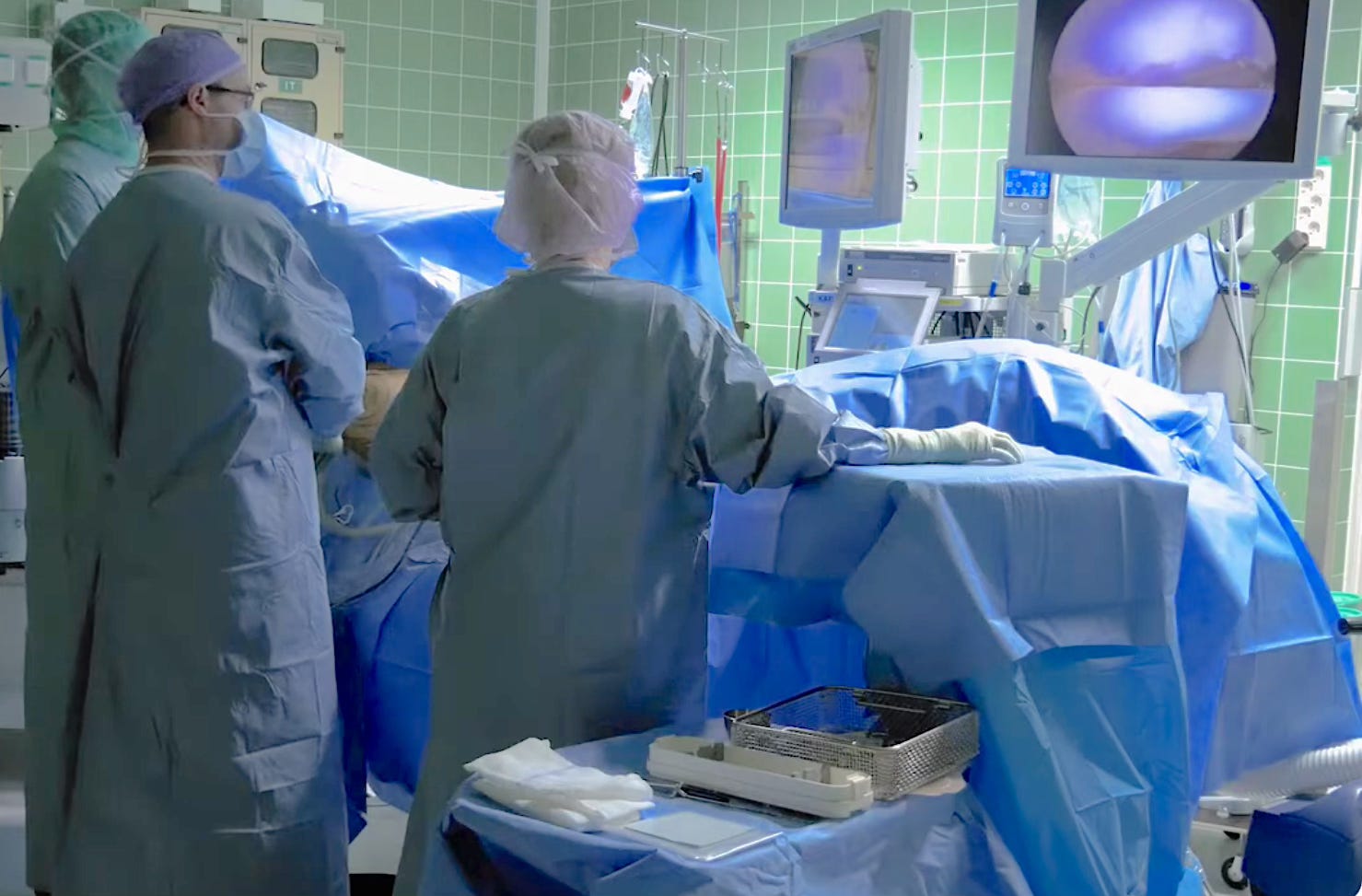
The researchers state that:
shoulder impingement is the most frequent cause of shoulder pain;
it accounts for 4.5 million yearly visits to physicians in the US;
at a cost of more than a billion dollars each year in the US;
the surgery in question - arthroscopic subacromial decompression or ASD - is the most common shoulder surgery in the world.
The researchers state that despite these findings
ASD continues to be performed—a pattern that seems to be typical of medical reversals—sustained by financial incentives, entrenched professional beliefs, and institutional inertia. Based on current evidence, ASD should not be offered outside rigorously designed clinical trials.

This work comes from the Finnish Center for Evidence-Based Orthopedics. The team explains their approach this way:
If there is no strong evidence that a medical intervention works, it is a suitable candidate for rigorous study.
Once we set out on this path, it quickly became clear that even for very common surgical procedures, the evidence base was astonishingly weak. In many cases, there was not even proof that surgery was more effective than non-surgical care.
You may be interested in this 4-minute video that explains the study.
An accompanying editorial in The BMJ stated:
The BMJ released a strongly worded clinical practice guideline, which concluded “almost all informed patients would choose to avoid surgery because there is no benefit but there are harms and it is burdensome. …
(These) results will likely reignite debate about ASD. Advocates for surgery will highlight the limitations of the study such as diagnostic arthroscopy not being a true placebo comparator …
Those who suggest that the study’s limitations are too great, or that subgroups exist who may benefit from ASD, need to provide high quality evidence that ASD is more effective than placebo. Otherwise, (this research) team and clinical guidelines are justified in recommending against routine use of ASD surgery.
Some of these same researchers were also involved in a sham surgery trial 12 years ago involving arthroscopic meniscus tear repair in the knee. It had a similar conclusion - that the actual surgery provided no significant benefit over sham surgery.
Orthopedic sham surgery trials can be controversial and often face criticism. “Arguments for and against their use in research are presented” in this paper. But the summary included this:
The field of orthopaedic surgery would benefit from further surgical trials that incorporate some element of sham surgery.
A more recent systematic review concluded:
This review suggests that sham surgery has shown to be just as effective as actual surgery in reducing pain and disability; however, care should be taken to generalize findings because of the limited number of studies.
Patients may not be aware that these trials are even performed. There is a growing literature about them and patients considering orthopedic surgery may want to ask their surgeon about whether any of these studies have been done regarding the procedure being considered.
I read this article with interest because I've suffered from shoulder impingement. Surgery was never suggested, but it did take many months of a combination of chiropractic, massage, and exercise therapy to resolve. I think sometimes people choose surgery seeking immediate relief. On the other hand, I also had a torn medial meniscus, for which I felt surgery was the only option, as it was not only painful but limited my ability to walk or move. Which brings me to the question, how does sham surgery work, exactly? Do they do something to cause major trauma to the body such that you'll need a few days of opiates? Because my body definitely knew I'd had the surgery!
I am eagerly awaiting the rage fueled backlash from the orthopedic surgeon community 🍿